Copper Corrosion in Petroleum Products: The Definitive Review of ASTM D130, Corrosive Sulfur Chemistry, Failure Mechanisms, and Mitigation
Sulphur is widely known as a protective antiwear compound in ZDDP, Molybdenum disulphide, and extreme pressure additives. Your steel components probably owe their survival to sulphur, but for copper that’s often a different picture.
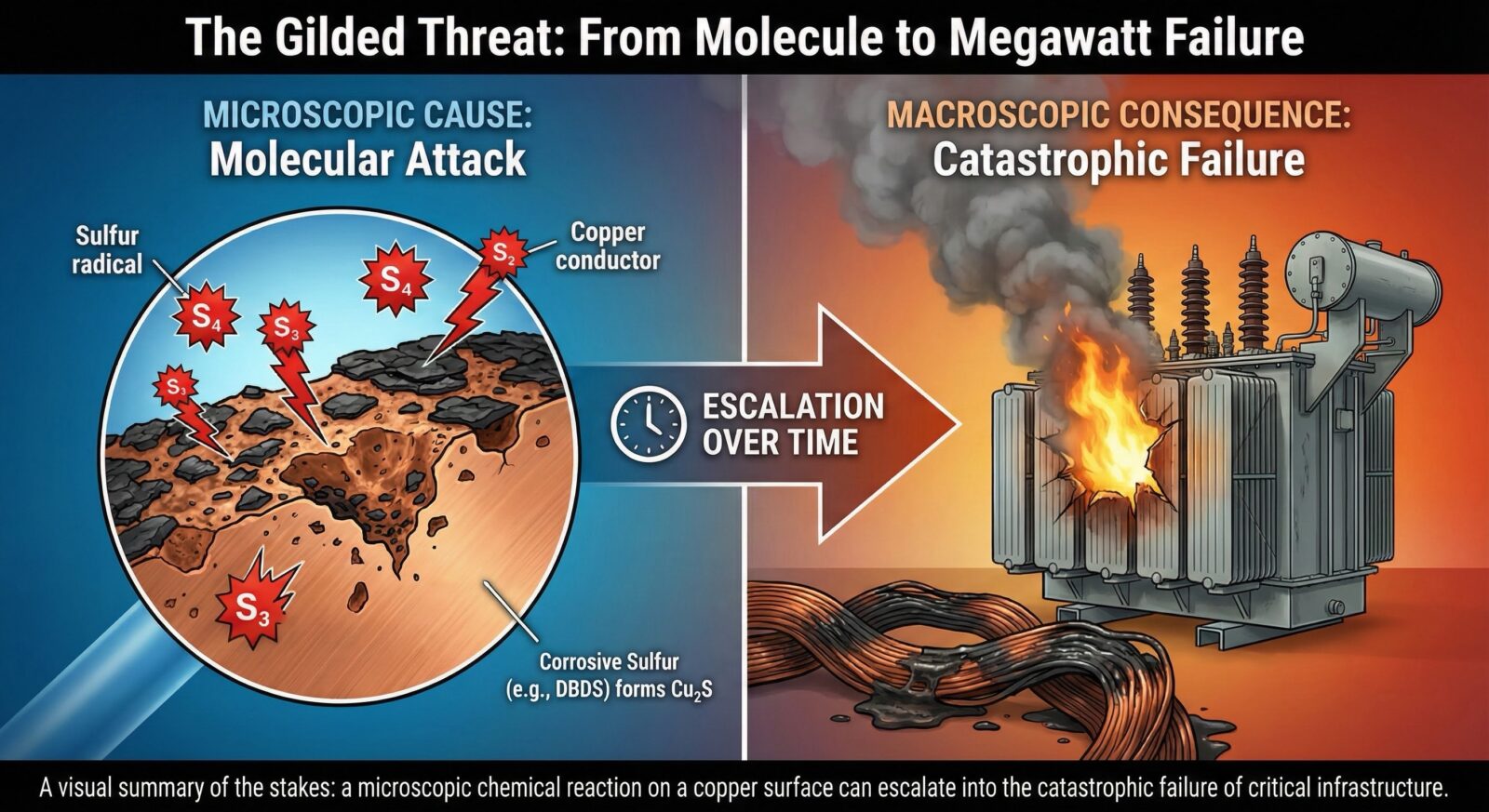
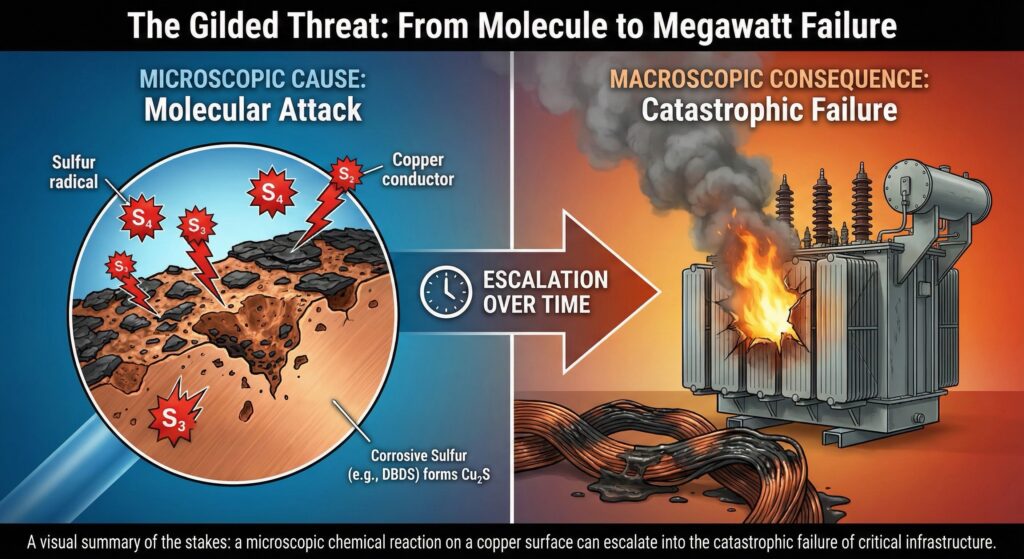
Copper corrosion testing of oils is something that’s going to only become more significant a test in future years. It’s already used in lube oil, fuel and electrical oil testing and will likely be a key test for EV systems especially ones that use combination lubricant and electrical insulator fluids. Copper is also key to many cooling systems and battery and circuitry technology that the importance of knowing how copper responds to any new or existing fluid becomes fundamental to all machinery survival. A mistake can lead to catastrophic failure and although you may think the picture headline image is a bit “click-bait”, it is also very very true.
A simple copper strip, exposed to oil for a few hours, stands between reliable operation and catastrophic failure of assets worth billions. From fuel injectors and bronze bearings to generator step-up transformers weighing hundreds of tonnes, copper and its alloys remain everywhere hydrocarbons flow.
Yet the greatest danger is not how much sulphur a fluid contains, but what kind.
This paper consolidates over a decade of industry experience, post-failure investigations, chemistry, metallurgy, and testing evolution into a single definitive technical reference on the subject of copper corrosion. It explains why certain sulfur compounds destroy copper while others remain benign, how ASTM D130 works and where it fails, what caused the global transformer DBDS crisis, and how modern industry prevents recurrence through chemistry, testing, and condition monitoring.
The misunderstanding of Sulphur in Hydrocarbon Systems
The most persistent misconception in petroleum testing is that total sulphur predicts corrosion. It does not.
An oil containing 0.3% total sulphur can operate for decades without incident, while another containing just 10 mg/kg (0.001%) of a specific reactive sulphur species can destroy the machinery within months. The difference lies entirely in sulphur speciation.
Sulphur in petroleum is not a single compound. It exists across a whole spectrum of molecular structures whose reactivity toward copper ranges from inert to aggressively destructive. Understanding copper corrosion therefore requires chemistry, not bulk numbers.
The Chemistry of Corrosive Sulfur: Why Some Molecules Kill Copper
The Reactivity Hierarchy
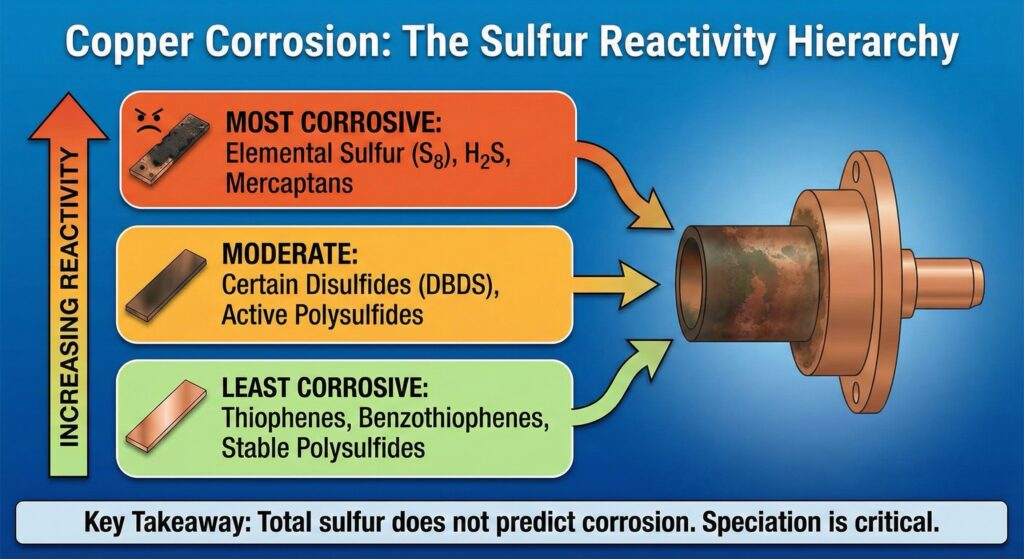
The image above helps group and categorise in your mind the different types of sulphurous compounds. Sulphur compounds attack copper according to a well-defined hierarchy governed by molecular structure, bond strength, and electron availability. The list below from most to least reactive:
- Elemental sulfur (S8)
- Hydrogen sulfide (H2S)
- Mercaptans (R-SH)
- Certain disulfides (notably DBDS)
- High-rank polysulfides
- Thiophenes and benzothiophenes (largely inert)
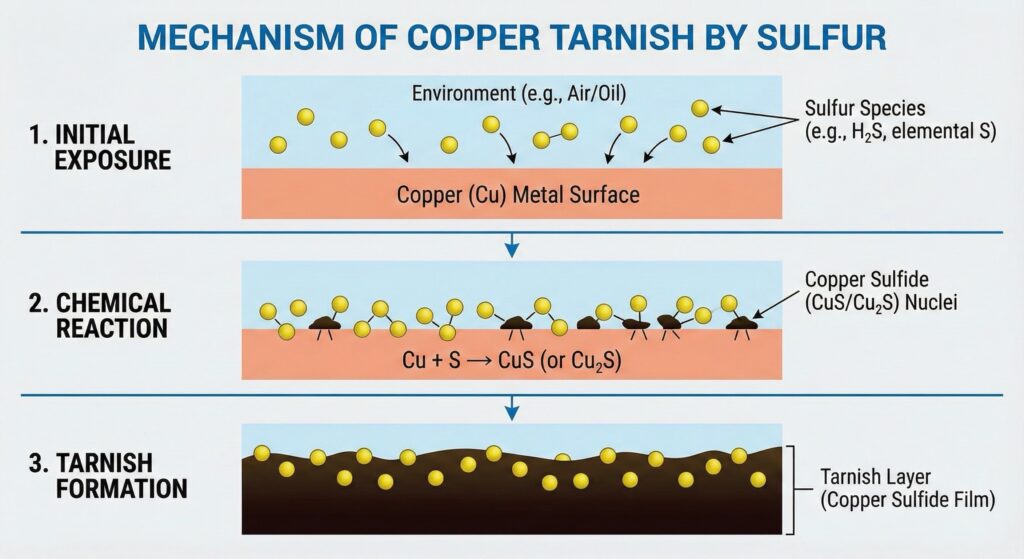
Elemental sulfur reacts directly with copper, even at ambient temperature, forming cuprous sulfide:
8Cu + S8 → 4Cu2S
Mercaptans follow closely. Their terminal sulphhydryl group is chemically “soft” and, under Hard–Soft Acid–Base theory, preferentially attacks soft metals such as copper.
In contrast, thiophenes and benzothiophenes contain sulphur locked within aromatic rings. Their lone pairs are delocalised into π-electron systems, rendering them effectively non-reactive until temperatures exceed approximately 1200C far beyond any petroleum application.
Active vs Inactive Sulphur
Industry therefore distinguishes between two fundamentally different sulphur behaviours.
Active sulphur is sulphur capable of reacting with copper under test or service conditions. This includes elemental sulfur, hydrogen sulphide, mercaptans, thermally unstable disulphides, and certain extreme-pressure polysulphides.
Inactive sulphur is sulphur bound in chemically stable structures such as thiophenes, benzothiophenes, and engineered additives designed to activate only at extreme contact temperatures.
This distinction underpins lubricant formulation, fuel specifications, and transformer oil testing.
Copper Sulphide: The Semiconductor That Shouldn’t Exist
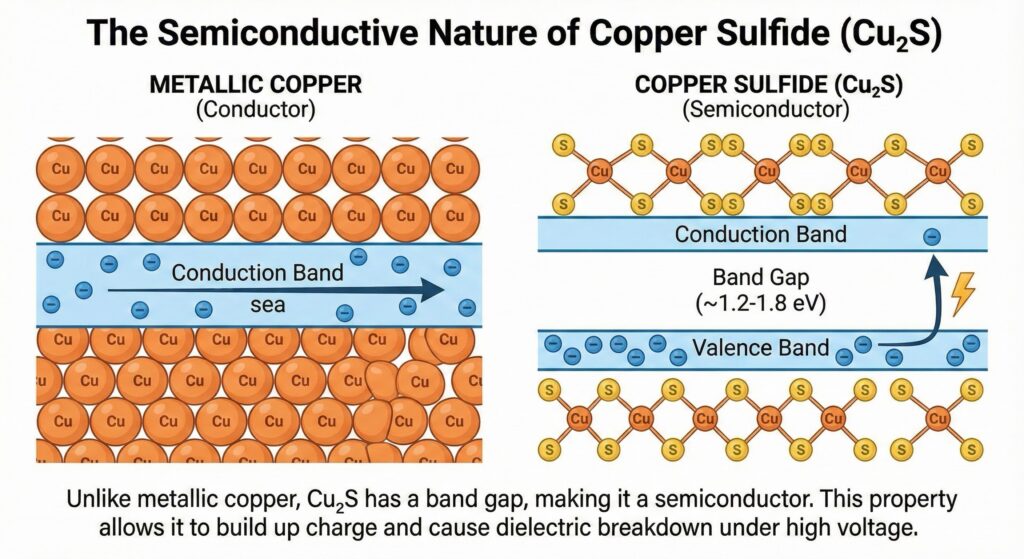
When corrosive sulphur attacks copper, it forms copper sulphide, predominantly Cu2S in oxygen-depleted systems.
This material is uniquely dangerous:
- It is semiconductive
- It appears black and is often mistaken for carbon contamination
- It is mobile and migrates through oil leading to a phenomenon called leaching where as it’s dispersible it exponentially keeps forming as the surface layer formed quickly is removed allowing fresh layers to be taken.
- It deposits preferentially inside cellulose insulation in transformers.
- It forms crystalline conductive bridges between fibres (linked to previous bullet point)
In electrical equipment, copper sulphide converts insulation into a semiconductor. In mechanical systems, it becomes a hard abrasive contaminant that accelerates wear.
ASTM D130: The Industry’s First Line of Defence
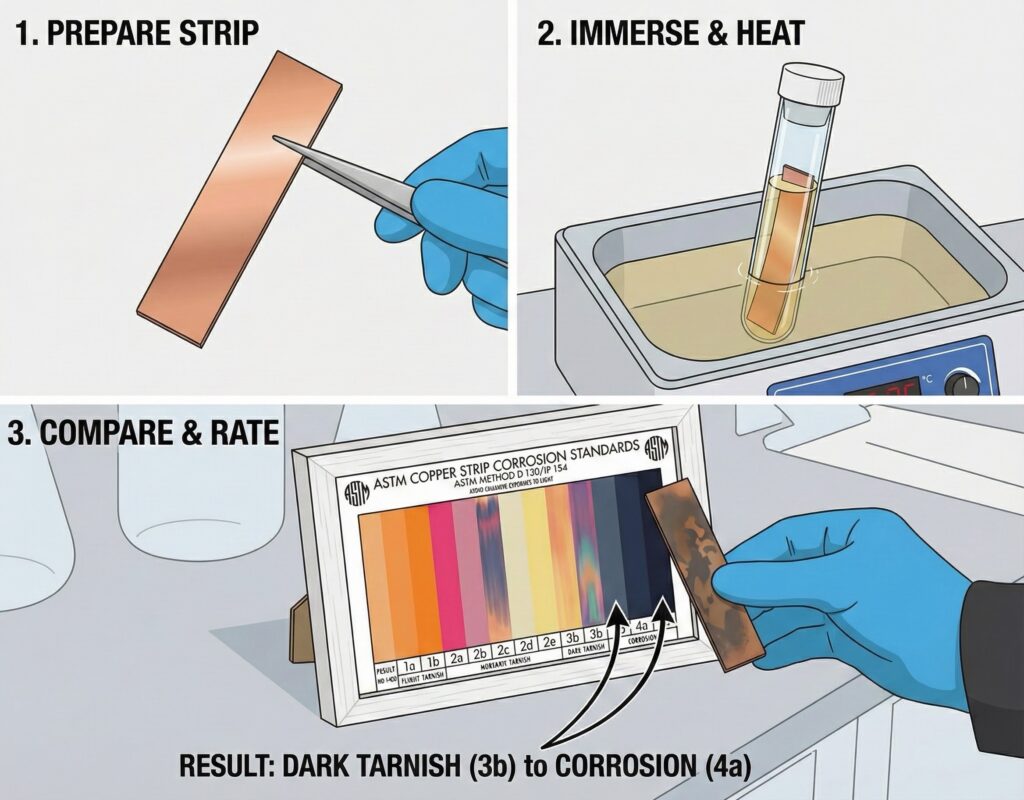
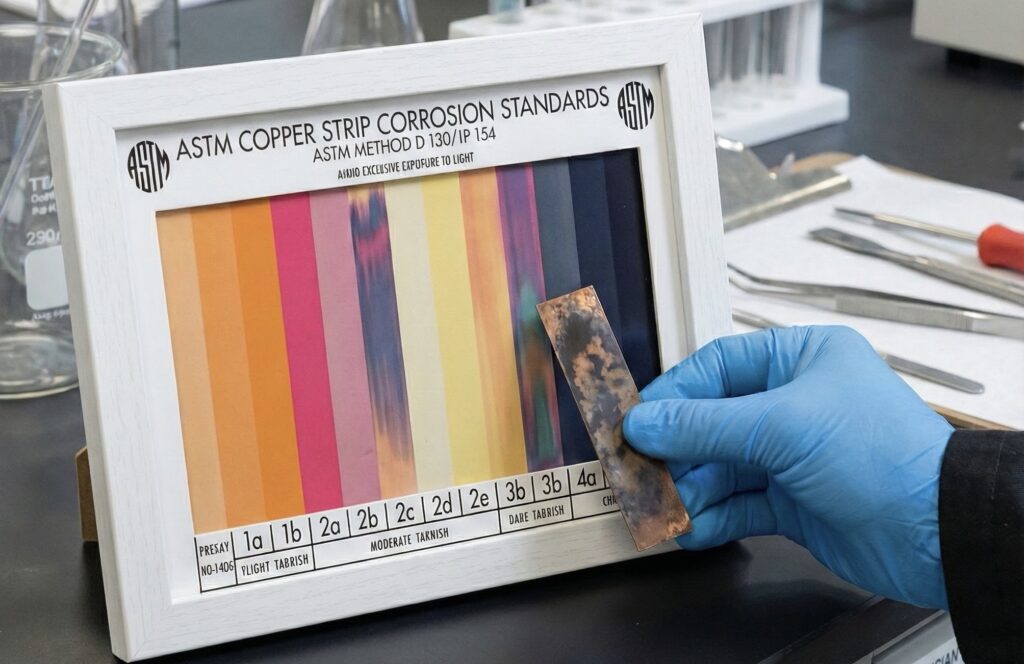
ASTM D130 remains the most widely used screening test for corrosive sulphur. Its principle is simple: expose a polished copper strip to oil under controlled conditions and compare the resulting tarnish to standard colour references.
How the test works?
Test Conditions by Product
| Product | Temperature | Duration |
|---|---|---|
| Aviation fuel | 100 °C | 2 hours |
| Gasoline | 50 °C | 3 hours |
| Diesel fuel | 50 °C | 3 hours |
| Lubricating oils | 100 °C | 3 hours |
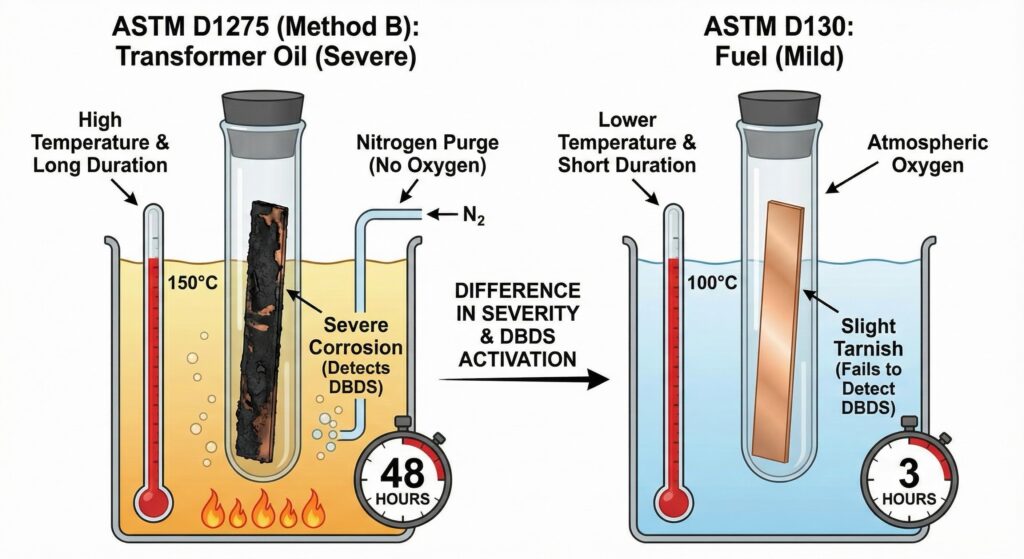
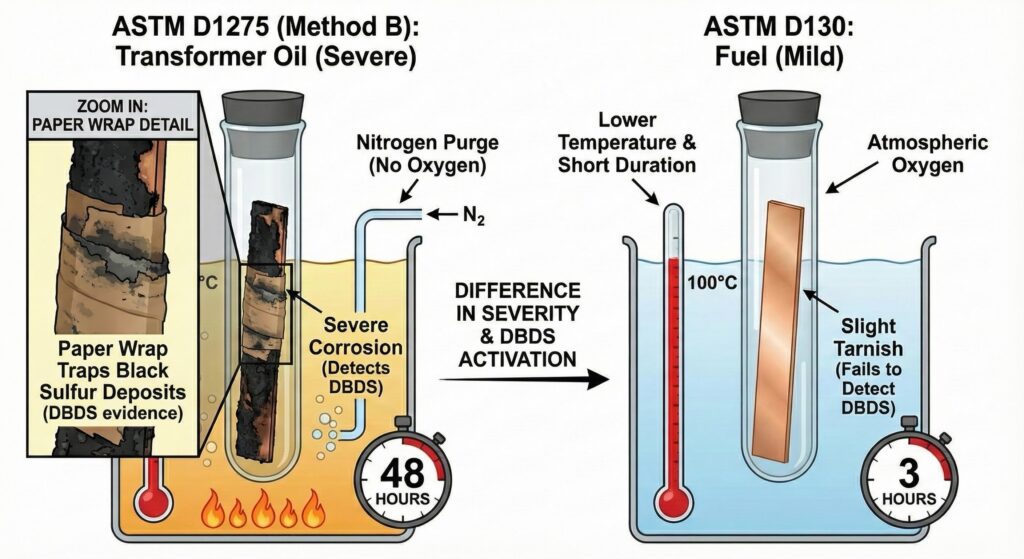
| Transformer oil (D1275B) | 150 °C | 48 hours |
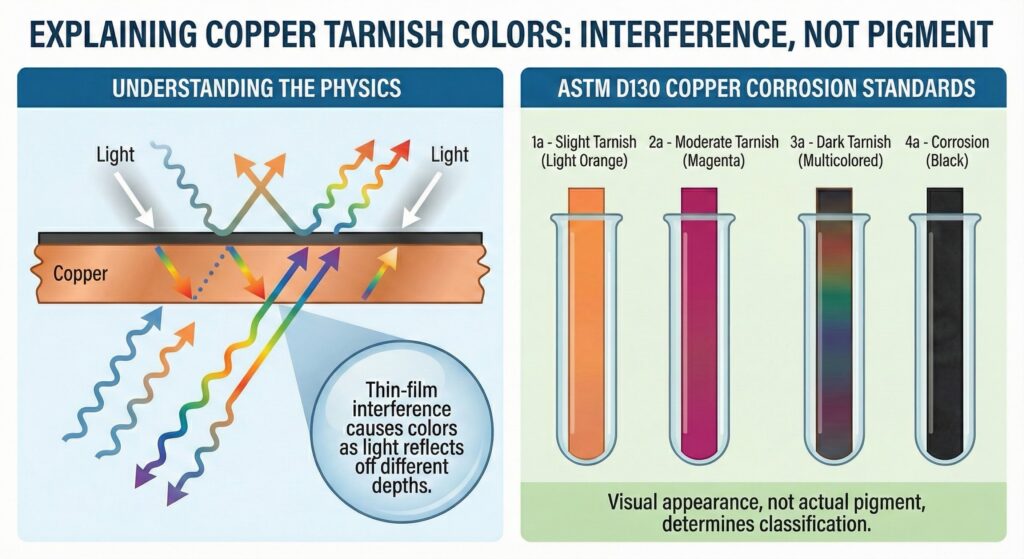
The Classification Scale
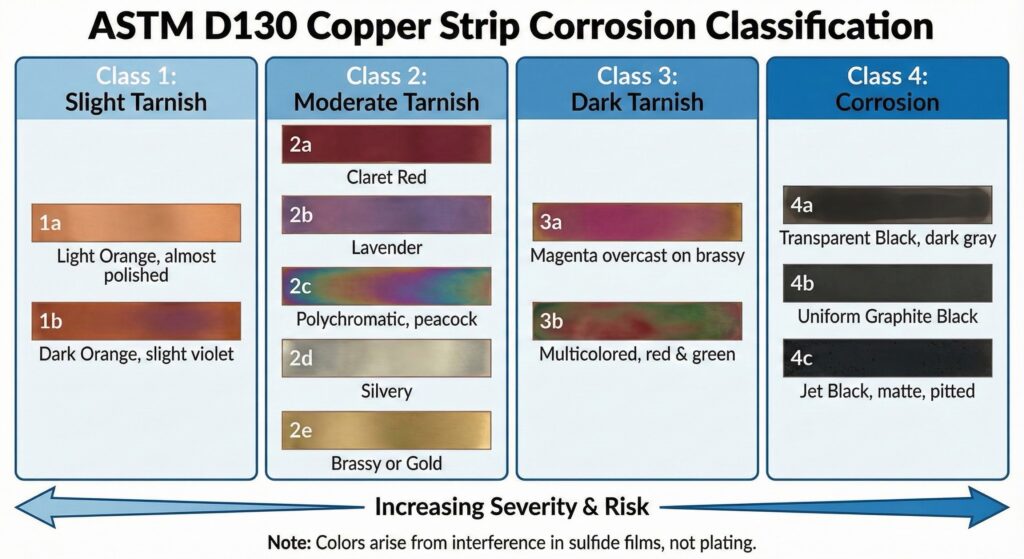
- Class 1 (1a–1b): Slight tarnish, acceptable
- Class 2 (2a–2e): Moderate tarnish, caution zone
- Class 3 (3a–3b): Dark tarnish, corrosive
- Class 4 (4a–4c): Black corrosion, failure
The colours arise from optical interference in growing sulphide films, not plating or contamination.
4.3 Limitations of ASTM D130
ASTM D130 is qualitative and subjective. Operator perception, lighting, and experience influence results, particularly in the polychromatic mid-range classifications. Hence in my experience it tends to be best used as a pass / fail test ie any visible tarnish is a fail.
One thing of note is the test only works if it mimics the real world operating conditions. Some particularly highly reactive sulphur species can pass the test entirely if they are very stable under the test conditions but under the extremes of the machinery conditions can decompose to reactive sulphurous compounds.
The DBDS Transformer Crisis
Dibenzyl disulphide (DBDS) reshaped copper corrosion testing more than any compound in modern history. Once deliberately added as an antioxidant, DBDS was long considered stable.
At hotspot temperatures above 120 °C, DBDS undergoes homolytic cleavage, forming highly reactive sulfur radicals and benzyl mercaptan. These species dissolve copper, migrate through oil, and deposit copper sulfide inside paper insulation.
The result is catastrophic dielectric failure, often without any warning from dissolved gas analysis.
This crisis forced the industry to adopt more severe testing, paper-wrapped conductor methods, and direct sulfur speciation.
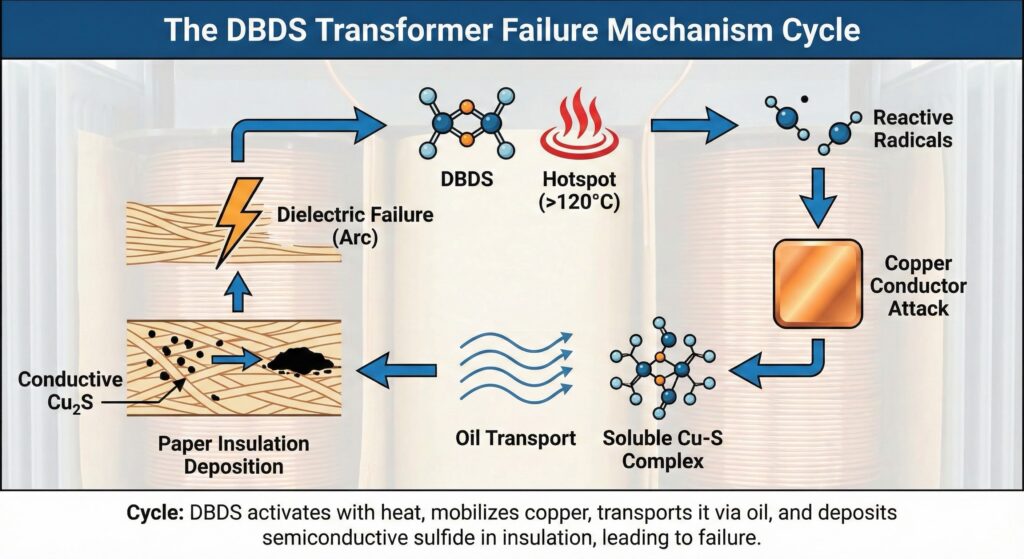
The mistake in these circumstances was the test didn’t reflect the conditions of the system. Fuel or lubricating oil the copper strip would be in direct contact with the liquid, but transformers most of the copper is wrapped in paper and a high temperature thermal hotspot can lead to temperatures up to 700’C.
Lubricants: Where Sulfur Is Both Friend and Enemy
Unlike fuels and modern transformer oils, lubricants intentionally contain sulphur, but its form and concentration can lead to issues if not managed correctly.

ZDDP
Zinc dialkyldithiophosphate provides anti-wear protection by decomposing at asperity contact points to form protective phosphate and sulphurous films. Secondary ZDDPs are more reactive and more corrosive, while primary ZDDPs are gentler but slower to activate.
Extreme Pressure Additives
EP additives activate under high load and temperature. Active sulphur destroys bronze and brass, while inactive sulfur provides protection without corrosion. This distinction determines whether a lubricant is safe for worm gears, synchronisers, or copper-lead bearings.
Fuels, Silver, and Biodiesel
Modern fuel systems increasingly contain silver and silver–palladium contacts. Silver is even more sensitive than copper to certain sulfur species, necessitating separate silver corrosion testing in aviation fuels.
Biodiesel FAME fuel introduces additional corrosion pathways through free fatty acids, hygroscopicity, and oxidative degradation. Copper corrosion rates in biodiesel can be five to twenty times higher than in petroleum diesel.
A wet biodiesel is even worse as it splits the ester into more fatty acids and the combination attack the copper. Sulphur in petroleum fuels is seldom an issue in most land based machinery bar old bulk storage fuels. However marine fuels are generally far higher sulphur by a factor of 100 to 1000 more than land based fuels, making marine clients advised to always measure copper corrosion as part of any regular testing.

Mitigation: Passivators and Reality
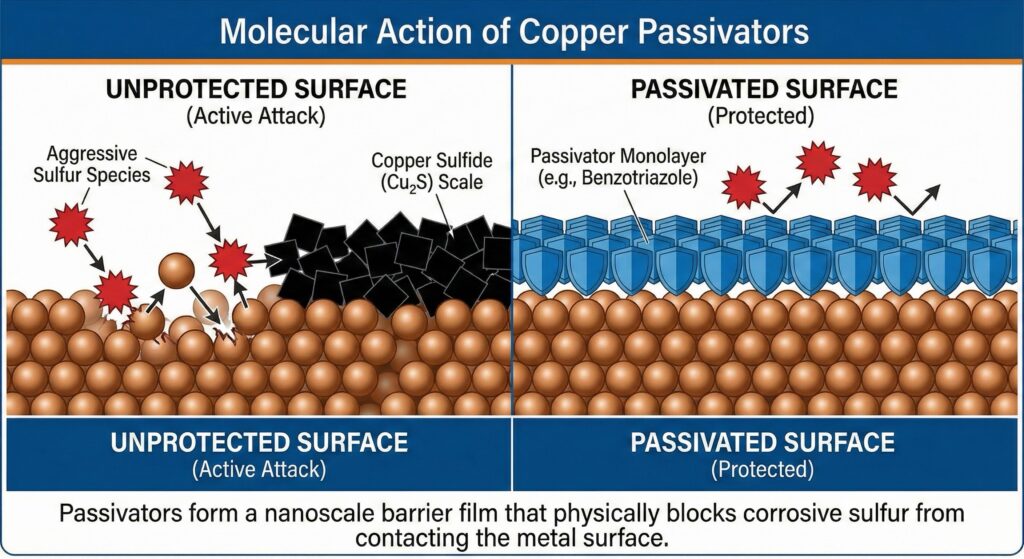
Benzotriazole and tolyltriazole form nanometre-scale chemisorbed films on copper surfaces that block sulfur access. They do not remove sulfur; they delay its consequences.
In transformer oils, tolyltriazole-based passivators are typically maintained around 100 ppm. They are sacrificial, do not reverse existing damage, do not protect paper insulation, and require ongoing monitoring.
Several copper deactivators are skin irritants and so are often kept fairly low levels in the final product to avoid additional warning labels.
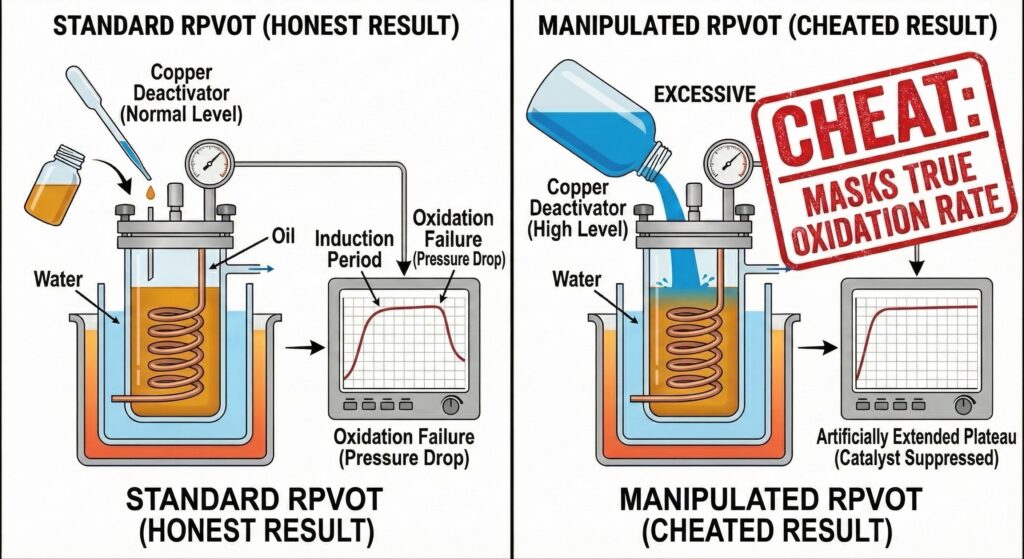
An interesting point is this property of copper deactivators is so effective that some oil suppliers dose way beyond recommended doses to improve oxidation stability (by removing the catalyst from the test) of their products for product performance testing so they have phenomenally high test benchmarks beyond what would be expected in real life performance.
Diagnostics Beyond Visual Testing
Copper corrosion testing can go beyond visual inspection. Not to delve too deep into these areas but to give a flavour of complementary tests the following is useful information to the reader.
Elemental analysis of sulphur is a crude indicator but also elemental analysis of copper in used samples can be a significant indicator that corrosion is occurring. Particularly useful in identifying passivator depletion but also in identifying issues in transformers. It’s disappointing that elemental analysis is not more regularly used on transformer oil analysis and I would encourage this to be a standard test in any transformer oil analysis. FTIR can also be used to track oxidation and additive degradation.
Additional tests that can be used include SEM-EDX confirms sulphide versus oxide deposits and GC-SCD identifies specific sulphur threats such as DBDS.
Conclusion
As equipment temperatures rise, service intervals extend, and power grids age, copper corrosion will remain a defining challenge. Those who understand the chemistry, not just the specification, will protect their assets. Those who do not will repeat history.
Copper corrosion is a molecular-scale process capable of destroying megawatt-scale infrastructure. The industry paid dearly to learn this lesson once. This paper exists so it never has to learn it again.